


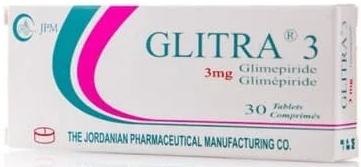

- Brand: Glitra
- Concentration: 3 mg
- Ingredient: Glimepiride
- Product Form: Tablet
- Quantity: 30 Tablets

Product Overview:
Glitra (Glimepiride) is a medicine used to help control blood sugar levels in people with type 2 diabetes. It works by helping your pancreas release more insulin, which lowers the amount of sugar in your blood. Common side effects include low blood sugar, headache, nausea, dizziness, and weight gain. Glimepiride is usually taken with your first main meal of the day. Tell your health care provider if you have frequent episodes of low blood sugar while taking glimepiride. This product contains 30 tablets.
Key Features:
- GLITRA is an orally active blood sugar lowering medicine.
- This medicine belongs to a group of medicines called sulfonylureas.
- GLITRA works by increasing the amount of insulin released from your pancreas.
How it Works:
- Glimepiride helps to increase your body’s insulin levels. Insulin is released from your pancreas. It is a hormone that helps your body use blood sugar (glucose) as a source of energy.
Benefits:
Glimepiride is commonly used to help lower blood sugar levels in people with type 2 diabetes.
Glimepiride may also be used for other conditions as determined by your health care provider.
Directions for Use:
- Follow all directions on your prescription label and read all medication guides or instruction sheets. Your doctor may occasionally change your dose. Use the medicine exactly as directed.
- Glimepiride is usually taken once a day with breakfast or the first main meal of the day.
- Your blood sugar will need to be checked on a regular basis, and you may need other medical tests.
- Blood sugar can be affected by stress, illness, surgery, exercise, alcohol use, or skipping meals.
- Low blood sugar (hypoglycemia) can make you feel very hungry, dizzy, irritable, or shaky. To quickly treat hypoglycemia, eat or drink hard candy, crackers, raisins, fruit juice, or non-diet soda. Your doctor may prescribe glucagon injection in case of severe hypoglycemia.
Active Ingredients:
- Glimepiride 3 mg
Side Effects:
Severe Allergic Reactions. Glimepiride may cause allergic reactions, which can be serious. Stop taking glimepiride and get help right away if you have any of the following symptoms of a serious allergic reaction.
- Breathing problems or wheezing
- Racing heart
- Fever or general ill feeling
- Swollen lymph nodes
- Swelling of the face, lips, mouth, tongue, or throat
- Trouble swallowing or throat tightness
- Itching or skin rash
- Bumps on the skin called hives that can be red, pink, white, or brown
- depending on your skin tone
- Nausea or vomiting
- Dizziness, feeling lightheaded, or fainting
- Stomach cramps
- Joint pain
- Low Blood Sugar (Hypoglycemia). Glimepiride can cause low blood
- Sugar, which can be serious and may lead to death.
Common side effects may include:
- Low blood sugar
Headache
Nausea
Dizziness
Cautions & Warnings:
- You should not use glimepiride if you have diabetic ketoacidosis.
- Tell your doctor about all your other medicines. Some drugs should not be used with glimepiride.
You should not use glimepiride if you are allergic to it, or if you have:
- A condition called diabetic ketoacidosis; or
- An allergy to sulfa drugs.
Tell your doctor if you have or have ever had:
- A genetic enzyme deficiency called glucose-6-phosphate dehydrogenase (G6PD) deficiency; or
- Liver or kidney disease.
Glimepiride may increase your risk of heart problems. Ask your doctor about this risk.
Pregnancy Warnings:
It is not known if or how glimepiride could affect pregnancy or harm a fetus. Tell your health care provider if you are or plan to become pregnant. Your health care provider will let you know if you should take glimepiride while you are pregnant or trying to get pregnant.
Breastfeeding Warnings:
It is not known if glimepiride passes into breast milk. Tell your health care provider if you are breastfeeding or plan to breastfeed. Your health care provider will let you know if you should take glimepiride while breastfeeding.
Storage:
Glimepiride should be stored at room temperature, between 68 F and 77 F (20 C and 25 C). It can be exposed to temperatures between 59 F and 86 F (15 C and 30 C) for shorter periods of time, such as when transporting it. Store in a cool, dry place.
FAQ:
- Q: What other drugs will affect glimepiride?
A:Sometimes it is not safe to use certain medicines at the same time. Some drugs can affect your blood levels of other drugs you use, which may increase side effects or make the medicines less effective. - Q: What should I avoid while taking glimepiride?
A:Do not drink alcohol. Dangerous side effects could occur.Avoid driving or hazardous activity until you know how glimepiride will affect you. Your reactions could be impaired. - Q: What happens if I overdose?
A: Seek emergency medical attention or call the Poison. A glimepiride overdose can cause life-threatening hypoglycemia. - Q: What happens if I miss a dose?
A:Take your dose as soon as you can, but only if you are getting ready to eat a meal. If you skip a meal, skip the missed dose and wait until your next meal. Do not take two doses at one time.
Product Details:
- Ingredient: Glimepiride
- Product Form: Tablet
- Quantity: 30 Tablets
- Brand: Glitra
- Concentration: 3 mg

Genuine brands
Temperature Controlled
Secure Payment
- Brand: Glitra
- Concentration: 3 mg
- Ingredient: Glimepiride
- Product Form: Tablet
- Quantity: 30 Tablets
Genuine brands
Temperature Controlled
Secure Payment
About Product
Product Overview:
Glitra (Glimepiride) is a medicine used to help control blood sugar levels in people with type 2 diabetes. It works by helping your pancreas release more insulin, which lowers the amount of sugar in your blood. Common side effects include low blood sugar, headache, nausea, dizziness, and weight gain. Glimepiride is usually taken with your first main meal of the day. Tell your health care provider if you have frequent episodes of low blood sugar while taking glimepiride. This product contains 30 tablets.
Key Features:
- GLITRA is an orally active blood sugar lowering medicine.
- This medicine belongs to a group of medicines called sulfonylureas.
- GLITRA works by increasing the amount of insulin released from your pancreas.
How it Works:
- Glimepiride helps to increase your body’s insulin levels. Insulin is released from your pancreas. It is a hormone that helps your body use blood sugar (glucose) as a source of energy.
Benefits:
Glimepiride is commonly used to help lower blood sugar levels in people with type 2 diabetes.
Glimepiride may also be used for other conditions as determined by your health care provider.
Directions for Use:
- Follow all directions on your prescription label and read all medication guides or instruction sheets. Your doctor may occasionally change your dose. Use the medicine exactly as directed.
- Glimepiride is usually taken once a day with breakfast or the first main meal of the day.
- Your blood sugar will need to be checked on a regular basis, and you may need other medical tests.
- Blood sugar can be affected by stress, illness, surgery, exercise, alcohol use, or skipping meals.
- Low blood sugar (hypoglycemia) can make you feel very hungry, dizzy, irritable, or shaky. To quickly treat hypoglycemia, eat or drink hard candy, crackers, raisins, fruit juice, or non-diet soda. Your doctor may prescribe glucagon injection in case of severe hypoglycemia.
Active Ingredients:
- Glimepiride 3 mg
Side Effects:
Severe Allergic Reactions. Glimepiride may cause allergic reactions, which can be serious. Stop taking glimepiride and get help right away if you have any of the following symptoms of a serious allergic reaction.
- Breathing problems or wheezing
- Racing heart
- Fever or general ill feeling
- Swollen lymph nodes
- Swelling of the face, lips, mouth, tongue, or throat
- Trouble swallowing or throat tightness
- Itching or skin rash
- Bumps on the skin called hives that can be red, pink, white, or brown
- depending on your skin tone
- Nausea or vomiting
- Dizziness, feeling lightheaded, or fainting
- Stomach cramps
- Joint pain
- Low Blood Sugar (Hypoglycemia). Glimepiride can cause low blood
- Sugar, which can be serious and may lead to death.
Common side effects may include:
- Low blood sugar
Headache
Nausea
Dizziness
Cautions & Warnings:
- You should not use glimepiride if you have diabetic ketoacidosis.
- Tell your doctor about all your other medicines. Some drugs should not be used with glimepiride.
You should not use glimepiride if you are allergic to it, or if you have:
- A condition called diabetic ketoacidosis; or
- An allergy to sulfa drugs.
Tell your doctor if you have or have ever had:
- A genetic enzyme deficiency called glucose-6-phosphate dehydrogenase (G6PD) deficiency; or
- Liver or kidney disease.
Glimepiride may increase your risk of heart problems. Ask your doctor about this risk.
Pregnancy Warnings:
It is not known if or how glimepiride could affect pregnancy or harm a fetus. Tell your health care provider if you are or plan to become pregnant. Your health care provider will let you know if you should take glimepiride while you are pregnant or trying to get pregnant.
Breastfeeding Warnings:
It is not known if glimepiride passes into breast milk. Tell your health care provider if you are breastfeeding or plan to breastfeed. Your health care provider will let you know if you should take glimepiride while breastfeeding.
Storage:
Glimepiride should be stored at room temperature, between 68 F and 77 F (20 C and 25 C). It can be exposed to temperatures between 59 F and 86 F (15 C and 30 C) for shorter periods of time, such as when transporting it. Store in a cool, dry place.
FAQ:
- Q: What other drugs will affect glimepiride?
A:Sometimes it is not safe to use certain medicines at the same time. Some drugs can affect your blood levels of other drugs you use, which may increase side effects or make the medicines less effective. - Q: What should I avoid while taking glimepiride?
A:Do not drink alcohol. Dangerous side effects could occur.Avoid driving or hazardous activity until you know how glimepiride will affect you. Your reactions could be impaired. - Q: What happens if I overdose?
A: Seek emergency medical attention or call the Poison. A glimepiride overdose can cause life-threatening hypoglycemia. - Q: What happens if I miss a dose?
A:Take your dose as soon as you can, but only if you are getting ready to eat a meal. If you skip a meal, skip the missed dose and wait until your next meal. Do not take two doses at one time.
Product Details:
- Ingredient: Glimepiride
- Product Form: Tablet
- Quantity: 30 Tablets
- Brand: Glitra
- Concentration: 3 mg