


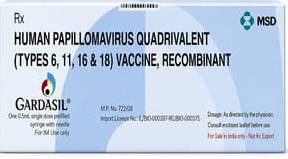
Gardasil Human Papillomavirus (HPV) Vaccine 0.5 ml 1 Pre-Filled Syringe (Refrigerator)
411.90
- Brand: Gardasil
- Concentration: 0.5 mg-ml
- Ingredient: Human Papillomavirus Bivalent Vaccine
- Product Form: Syringe
- Quantity: 1 Pc
Home delivery within 2 hours
 Get prescription for your medicine

Home delivery within 2 hours
Product Overview:
- Gardasil (Human Papillomavirus (HPV) vaccine protects you against four types of Human Papillomavirus (HPV) - 6, 11, 16, and 18. It helps prevent genital warts (caused by HPV 6 and 11) and serious cancers such as cervical, vulvar, vaginal, and anal cancers caused by HPV 16 and 18.
- The CDC recommends the Gardasil vaccine for girls, women, boys, and men between the ages of 9 and 45 years old. The vaccine contains virus-like particles (VLPs) that mimic the outer shell of HPV but contain no viral DNA, making it generally well-tolerated while still triggering a strong immune response. The vaccine is most effective when given before exposure to HPV.
- Possible side effects include pain, swelling, redness, itching, bruising, bleeding, a lump at the injection site, headache, fever, nausea, and dizziness. These effects are typically short-lived and resolve on their own.
- Before receiving the Gardasil vaccine, inform your doctor if you are pregnant, have a weakened immune system, or have any known allergies. It is advisable to refrain from vaccination if you have experienced a severe allergic reaction to any component of the vaccine.
How It Works:
- Gardasil injection works by stimulating the immune system with virus-like particles (VLPs) that closely resemble actual HPV viruses but contain no genetic material.
- After vaccination, the immune system recognizes these VLPs as foreign and produces antibodies that circulate. This provides protection after the immune response develops following vaccination.
- Gardasil vaccine will stimulate the formation of memory B cells and T cells, which "remember" HPV and provide long-lasting immunity that persists for many years.
- Widespread vaccination with Gardasil reduces HPV circulation, creating a “herd immunity effect” that protects even unvaccinated individuals.
Benefits:
- HPV-Related Diseases and Cancers: The Gardasil vaccine acts as the primary prevention method against HPV-related diseases and cancers.
- Cervical Cancer Prevention: With the Gardasil vaccine, cervical cancer caused by HPV types 16 and 18, which affects thousands of women worldwide, can be prevented.
- Genital Warts Prevention: 90% of genital warts are caused by HPV types 6 and 11. With the Gardasil vaccine, genital warts can be prevented and provide excellent protection against these uncomfortable and potentially recurrent lesions.
- Other Cancer Prevention: Gardasil vaccine protects against other types of cancers caused by HPV infection, such as anal, vaginal, and vulvar.
- Target Population: Gardasil is recommended for girls, women, boys, and men aged 9-45 years.
Directions for Use:
- Do not self-inject or administer the Gardasil vaccine.
- Gardasil vaccine is given by either your doctor or nurse.
- Follow the aftercare instructions suggested by the doctor.
- Gardasil vaccine must be administered as an intramuscular injection, preferably in the muscle of the upper arm.
- The vaccine should never be given intravenously, intradermally, or subcutaneously.
- Gardasil vaccine can be given in either a 2-dose or a 3-dose schedule.
- Gardasil vaccine can be given simultaneously with other age-appropriate vaccines, including Meningococcal vaccines, Tdap (tetanus, diphtheria, pertussis), COVID-19 vaccines, and Influenza vaccines.
- Different injection sites should be used when multiple vaccines are administered during the same visit.
- Standard Schedule (Ages 9-14): Gardasil can be administered in either a 2-dose or a 3-dose schedule. For the 2-dose schedule, the second dose should be administered 6 to 12 months after the first dose. If the second dose is administered earlier than 5 months after the first dose, administer a third dose at least 4 months after the second dose.
- Two doses given 6-12 months apart provide optimal protection when vaccination begins before age 15.
- Catch-up Schedule (Ages 15 - 45): Three doses are required - initial dose, second dose 1-2 months later, and third dose 6 months after the first dose.
- A healthcare professional will determine the appropriate dosing schedule.
- Timing Flexibility: The minimum interval between first and second doses is 4 weeks, and between second and third doses is 12 weeks.
Active Ingredients :
- Human Papillomavirus (HPV) (Types 6, 11, 16 & 18) - 0.5 ml
Side Effects:
- Injection site reactions - Pain and tenderness, redness and swelling, bruising or discolouration, and warmth
- Headache
- Mild fever
- Fatigue or tiredness
- Muscle aches
- Nausea
Cautions & Warnings:
- You have bleeding disorders like haemophilia.
- You are pregnant or planning to get pregnant.
- You have a compromised immune system, for instance, as a result of a genetic defect, HIV infection, or immune-compromising medications.
- You suffer from an illness with a high fever.
- Gardasil Vaccine may not completely protect everyone who receives it, as is the case with any vaccine.
- You are taking any other medications or over-the-counter medicines.
Pregnancy Warnings :
- It is best to avoid Gardasil vaccine during pregnancy. However, we recommend that you consult your doctor in case you are pregnant, suspect you are pregnant or plan to have a baby.
- Breastfeeding Warnings : Gardasil vaccine is safe during breastfeeding as it doesn't affect your milk production or the safety of your infant. However, it is always advised to consult a doctor before taking Gardasil vaccine if you are breastfeeding or plan to breastfeed.
Storage:
- Gardasil vaccine must be stored refrigerated at 2°C to 8°C (36°F to 46°F).
- The vaccine should never be frozen, as freezing destroys vaccine potency.
- Store the vaccine in the original packaging to protect from light exposure, which can degrade vaccine components.
- Used Gardasil injections or syringes should be disposed of according to local biomedical waste regulations.
FAQ:
- Q . What is the difference between Cervarix and Gardasil vaccine?
- A . Cervarix protects only against HPV types 16 and 18 (linked to cervical cancer), while Gardasil (quadrivalent) protects against HPV types 6, 11, 16, and 18.
- Q . Can Gardasil injection cause HPV infection or fertility problems?
- A . No. Gardasil injection cannot cause HPV infection, and studies show no link between Gardasil and fertility problems.
- Q . Where can I get Gardasil vaccine and how much does it cost?
- A . Gardasil is available at hospitals, pharmacies, and vaccination clinics. On PharmEasy, you can get Gardasil vaccine at a discounted price.
- Q . Can the vaccine be given during illness?
- A . Yes, it can be given during minor illnesses like colds. But it is recommended to delay vaccination in cases of moderate to severe illnesses.
Product Details:
- Ingredient: Human Papillomavirus Bivalent Vaccine
- Product Form: Syringe
- Quantity: 1 Pc
- Brand: Gardasil
- Concentration: 0.5 mg-ml

Genuine brands

Temperature Controlled

Secure Payment
- Brand: Gardasil
- Concentration: 0.5 mg-ml
- Ingredient: Human Papillomavirus Bivalent Vaccine
- Product Form: Syringe
- Quantity: 1 Pc
Genuine brands
Temperature Controlled
Secure Payment
About Product
Product Overview:
- Gardasil (Human Papillomavirus (HPV) vaccine protects you against four types of Human Papillomavirus (HPV) - 6, 11, 16, and 18. It helps prevent genital warts (caused by HPV 6 and 11) and serious cancers such as cervical, vulvar, vaginal, and anal cancers caused by HPV 16 and 18.
- The CDC recommends the Gardasil vaccine for girls, women, boys, and men between the ages of 9 and 45 years old. The vaccine contains virus-like particles (VLPs) that mimic the outer shell of HPV but contain no viral DNA, making it generally well-tolerated while still triggering a strong immune response. The vaccine is most effective when given before exposure to HPV.
- Possible side effects include pain, swelling, redness, itching, bruising, bleeding, a lump at the injection site, headache, fever, nausea, and dizziness. These effects are typically short-lived and resolve on their own.
- Before receiving the Gardasil vaccine, inform your doctor if you are pregnant, have a weakened immune system, or have any known allergies. It is advisable to refrain from vaccination if you have experienced a severe allergic reaction to any component of the vaccine.
How It Works:
- Gardasil injection works by stimulating the immune system with virus-like particles (VLPs) that closely resemble actual HPV viruses but contain no genetic material.
- After vaccination, the immune system recognizes these VLPs as foreign and produces antibodies that circulate. This provides protection after the immune response develops following vaccination.
- Gardasil vaccine will stimulate the formation of memory B cells and T cells, which "remember" HPV and provide long-lasting immunity that persists for many years.
- Widespread vaccination with Gardasil reduces HPV circulation, creating a “herd immunity effect” that protects even unvaccinated individuals.
Benefits:
- HPV-Related Diseases and Cancers: The Gardasil vaccine acts as the primary prevention method against HPV-related diseases and cancers.
- Cervical Cancer Prevention: With the Gardasil vaccine, cervical cancer caused by HPV types 16 and 18, which affects thousands of women worldwide, can be prevented.
- Genital Warts Prevention: 90% of genital warts are caused by HPV types 6 and 11. With the Gardasil vaccine, genital warts can be prevented and provide excellent protection against these uncomfortable and potentially recurrent lesions.
- Other Cancer Prevention: Gardasil vaccine protects against other types of cancers caused by HPV infection, such as anal, vaginal, and vulvar.
- Target Population: Gardasil is recommended for girls, women, boys, and men aged 9-45 years.
Directions for Use:
- Do not self-inject or administer the Gardasil vaccine.
- Gardasil vaccine is given by either your doctor or nurse.
- Follow the aftercare instructions suggested by the doctor.
- Gardasil vaccine must be administered as an intramuscular injection, preferably in the muscle of the upper arm.
- The vaccine should never be given intravenously, intradermally, or subcutaneously.
- Gardasil vaccine can be given in either a 2-dose or a 3-dose schedule.
- Gardasil vaccine can be given simultaneously with other age-appropriate vaccines, including Meningococcal vaccines, Tdap (tetanus, diphtheria, pertussis), COVID-19 vaccines, and Influenza vaccines.
- Different injection sites should be used when multiple vaccines are administered during the same visit.
- Standard Schedule (Ages 9-14): Gardasil can be administered in either a 2-dose or a 3-dose schedule. For the 2-dose schedule, the second dose should be administered 6 to 12 months after the first dose. If the second dose is administered earlier than 5 months after the first dose, administer a third dose at least 4 months after the second dose.
- Two doses given 6-12 months apart provide optimal protection when vaccination begins before age 15.
- Catch-up Schedule (Ages 15 - 45): Three doses are required - initial dose, second dose 1-2 months later, and third dose 6 months after the first dose.
- A healthcare professional will determine the appropriate dosing schedule.
- Timing Flexibility: The minimum interval between first and second doses is 4 weeks, and between second and third doses is 12 weeks.
Active Ingredients :
- Human Papillomavirus (HPV) (Types 6, 11, 16 & 18) - 0.5 ml
Side Effects:
- Injection site reactions - Pain and tenderness, redness and swelling, bruising or discolouration, and warmth
- Headache
- Mild fever
- Fatigue or tiredness
- Muscle aches
- Nausea
Cautions & Warnings:
- You have bleeding disorders like haemophilia.
- You are pregnant or planning to get pregnant.
- You have a compromised immune system, for instance, as a result of a genetic defect, HIV infection, or immune-compromising medications.
- You suffer from an illness with a high fever.
- Gardasil Vaccine may not completely protect everyone who receives it, as is the case with any vaccine.
- You are taking any other medications or over-the-counter medicines.
Pregnancy Warnings :
- It is best to avoid Gardasil vaccine during pregnancy. However, we recommend that you consult your doctor in case you are pregnant, suspect you are pregnant or plan to have a baby.
- Breastfeeding Warnings : Gardasil vaccine is safe during breastfeeding as it doesn't affect your milk production or the safety of your infant. However, it is always advised to consult a doctor before taking Gardasil vaccine if you are breastfeeding or plan to breastfeed.
Storage:
- Gardasil vaccine must be stored refrigerated at 2°C to 8°C (36°F to 46°F).
- The vaccine should never be frozen, as freezing destroys vaccine potency.
- Store the vaccine in the original packaging to protect from light exposure, which can degrade vaccine components.
- Used Gardasil injections or syringes should be disposed of according to local biomedical waste regulations.
FAQ:
- Q . What is the difference between Cervarix and Gardasil vaccine?
- A . Cervarix protects only against HPV types 16 and 18 (linked to cervical cancer), while Gardasil (quadrivalent) protects against HPV types 6, 11, 16, and 18.
- Q . Can Gardasil injection cause HPV infection or fertility problems?
- A . No. Gardasil injection cannot cause HPV infection, and studies show no link between Gardasil and fertility problems.
- Q . Where can I get Gardasil vaccine and how much does it cost?
- A . Gardasil is available at hospitals, pharmacies, and vaccination clinics. On PharmEasy, you can get Gardasil vaccine at a discounted price.
- Q . Can the vaccine be given during illness?
- A . Yes, it can be given during minor illnesses like colds. But it is recommended to delay vaccination in cases of moderate to severe illnesses.
Product Details:
- Ingredient: Human Papillomavirus Bivalent Vaccine
- Product Form: Syringe
- Quantity: 1 Pc
- Brand: Gardasil
- Concentration: 0.5 mg-ml
Get prescription for your medicine