


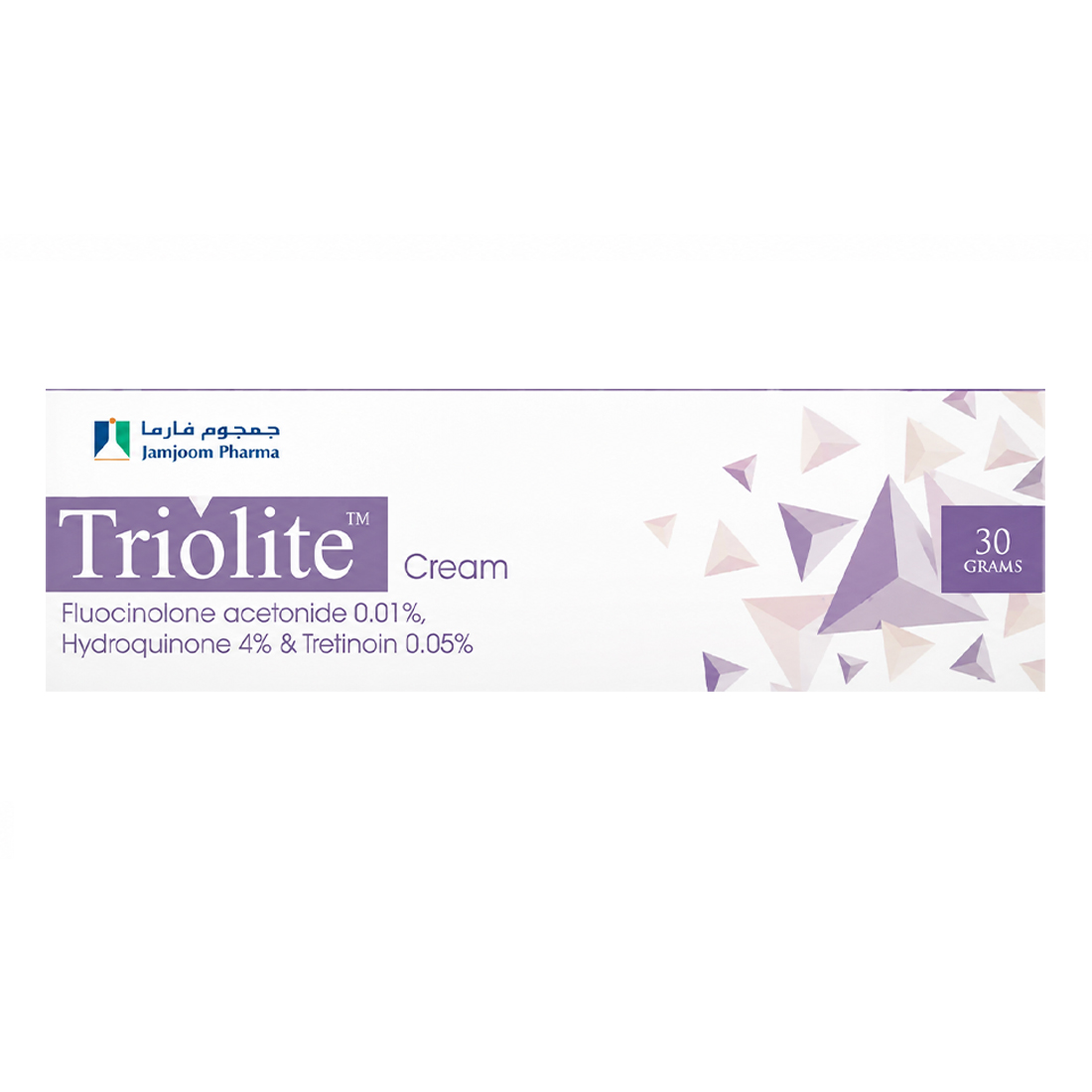
Jp Triolite Cream - 30 gm
 64 Pts
- Brand: Jp
- Product Form: Cream
- Product Type: Cream

Product Overview:
- Triolite Cream is designed to effectively treat melasma, a skin condition characterized by dark patches on the face, particularly on the cheeks and forehead.
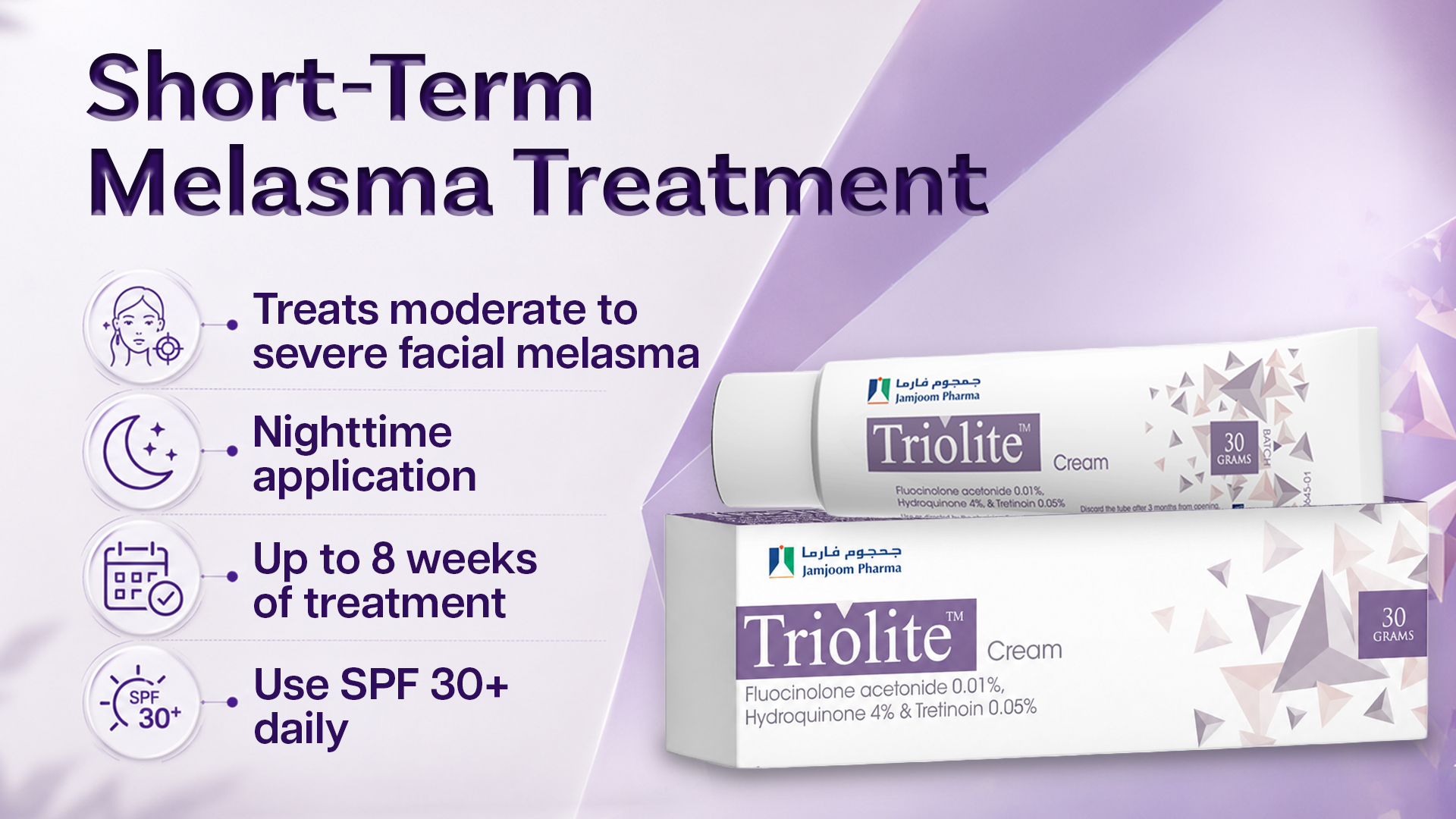
- This cream combines Fluocinolone Acetonide, Hydroquinone, and Tretinoin to target moderate to severe cases of facial melasma. For optimal results, apply Triolite Cream for short-term use of up to 8 weeks while avoiding long-term treatment.
- It is essential to minimize sun exposure and hormonal contraceptives during the treatment period.
Key Features:
- Effective treatment for melasma and hyperpigmentation.
- Short-term use recommended for up to 8 weeks.
- Contains Fluocinolone Acetonide, Hydroquinone, and Tretinoin.
- Not intended for long-term use; consult a doctor.
- Minimizes dark patches on the face.
- Helps restore an even skin tone.
How it Works:
- Fluocinolone is a corticosteroid (steroid medicine), hydroquinone is a bleaching agent, and tretinoin is a retinoid (related to vitamin A).
Benefits:
- Reduces the appearance of melasma and dark spots on the face.
- Enhances skin tone and texture for a more youthful appearance.
- Short-term treatment option for effective results.
- Helps prevent the recurrence of pigmentation issues.
- Easy to apply and absorbs quickly into the skin.
- Supports skin rejuvenation and overall health.
- Recommended for moderate to severe facial melasma.
- Provides a comprehensive approach to managing hyperpigmentation.
Directions for Use:
- For topical dosage form (cream):
- For melasma:
- Adults—Apply a thin layer to the affected area(s) of the skin at least 30 minutes before bedtime.
- Children—Use and dose must be determined by your doctor.
Active Ingredients:
- Fluocinolone Acetonide 0.01% : A potent anti-inflammatory that reduces skin irritation and redness.
- Hydroquinone 4%: Lightens dark patches by inhibiting melanin production.
- Tretinoin 0.05%: Promotes skin cell turnover, helping to improve skin texture and tone.

Side Effects:
Some side effects may occur that usually do not need medical attention. These side effects may go away during treatment as your body adjusts to the medicine. Also, your health care professional may be able to tell you about ways to prevent or reduce some of these side effects. Check with your health care professional if any of the following side effects continue or are bothersome or if you have any questions about them:
Less common
- burning, crawling, itching, numbness, prickling, "pins and needles", or tingling feelings
- pimples
- raised, dark red, wart-like spots on the skin
- Along with its needed effects, a medicine may cause some unwanted effects. Although not all of these side effects may occur, if they do occur they may need medical attention.
Check with your doctor immediately if any of the following side effects occur:
More common
- Redness, peeling, drying, itching, or burning of the skin
Less common
- Darkening of normal skin color
- irritated skin
- rash
Incidence not known
- Blistering, crusting, or flaking of the skin
- burning and itching of the skin with pinhead-sized red blisters
- lightening of normal skin color
- redness and scaling around the mouth
- severe redness, soreness, or scaling of the skin
- thinning of the skin with easy bruising
- Blemishes on the skin
Caution & Warnings:
- It is very important that your doctor check your progress at regular visits. This will allow your doctor to see if the medicine is working properly and to decide if you should continue to use it.
- Make sure your doctor knows if you are pregnant or planning to become pregnant. If you become pregnant while using this medicine, tell your doctor right away.
- This medicine may cause a skin condition called exogenous ochronosis, which is a blue-black discoloration of the skin. Check with your doctor right away if you have a gradual darkening of the skin.
- This medicine may make your skin more sensitive to sunlight, wind, and cold weather. Avoid sunlamps and tanning beds.
- Skin reactions such as dryness, redness, peeling, burning, or itching can occur when you use this medicine. Use a moisturizer as needed to lessen these skin problems.
- Using too much of this medicine or using it for a long time may increase your risk of having adrenal gland problems. Talk to your doctor right away if you have more than one of these symptoms while you are using this medicine: blurred vision, dizziness or fainting, a fast, irregular, or pounding heartbeat, increased thirst or urination, irritability, or unusual tiredness or weakness.
- If you have a sunburn, stop using this medicine until your skin is healed.
- Do not use any other medicines on the treated skin areas without talking to your doctor. Avoid using any skin care products that can dry or irritate your skin. These include rough skin cleansers, wart removal products, soaps or cosmetics that cause dryness, or products that contain alcohol, astringents, spices, or lime
Storage:
- Store in the refrigerator. Do not freeze.
- Keep out of the reach of children.
- Do not keep outdated medicine or medicine no longer needed.
- Ask your healthcare professional how you should dispose of any medicine you do not use.
FAQs:
- Q. Can Triolite Cream be used for other dark spots or skin lightening?
- A. No. Triolite Cream is only approved for facial melasma. It has not been proven safe or effective for other pigment problems like freckles, age spots, or acne marks.
- Q.Is Triolite Cream meant for long-term use?A. No. Triolite Cream is for short-term use only. Once your dark patches improve, your doctor may suggest stopping and switching to other maintenance options. Using it continuously may increase the risk of skin side effects.

Product Details:
- Brand: Jp
- Product Form: Cream
- Product Type: Cream

Genuine brands

Temperature Controlled

Secure Payment
- Brand: Jp
- Product Form: Cream
- Product Type: Cream
Genuine brands
Temperature Controlled
Secure Payment
About Product
Product Overview:
- Triolite Cream is designed to effectively treat melasma, a skin condition characterized by dark patches on the face, particularly on the cheeks and forehead.
- This cream combines Fluocinolone Acetonide, Hydroquinone, and Tretinoin to target moderate to severe cases of facial melasma. For optimal results, apply Triolite Cream for short-term use of up to 8 weeks while avoiding long-term treatment.
- It is essential to minimize sun exposure and hormonal contraceptives during the treatment period.
Key Features:
- Effective treatment for melasma and hyperpigmentation.
- Short-term use recommended for up to 8 weeks.
- Contains Fluocinolone Acetonide, Hydroquinone, and Tretinoin.
- Not intended for long-term use; consult a doctor.
- Minimizes dark patches on the face.
- Helps restore an even skin tone.
How it Works:
- Fluocinolone is a corticosteroid (steroid medicine), hydroquinone is a bleaching agent, and tretinoin is a retinoid (related to vitamin A).
Benefits:
- Reduces the appearance of melasma and dark spots on the face.
- Enhances skin tone and texture for a more youthful appearance.
- Short-term treatment option for effective results.
- Helps prevent the recurrence of pigmentation issues.
- Easy to apply and absorbs quickly into the skin.
- Supports skin rejuvenation and overall health.
- Recommended for moderate to severe facial melasma.
- Provides a comprehensive approach to managing hyperpigmentation.
Directions for Use:
- For topical dosage form (cream):
- For melasma:
- Adults—Apply a thin layer to the affected area(s) of the skin at least 30 minutes before bedtime.
- Children—Use and dose must be determined by your doctor.
Active Ingredients:
- Fluocinolone Acetonide 0.01% : A potent anti-inflammatory that reduces skin irritation and redness.
- Hydroquinone 4%: Lightens dark patches by inhibiting melanin production.
- Tretinoin 0.05%: Promotes skin cell turnover, helping to improve skin texture and tone.
Side Effects:
Some side effects may occur that usually do not need medical attention. These side effects may go away during treatment as your body adjusts to the medicine. Also, your health care professional may be able to tell you about ways to prevent or reduce some of these side effects. Check with your health care professional if any of the following side effects continue or are bothersome or if you have any questions about them:
Less common
- burning, crawling, itching, numbness, prickling, "pins and needles", or tingling feelings
- pimples
- raised, dark red, wart-like spots on the skin
- Along with its needed effects, a medicine may cause some unwanted effects. Although not all of these side effects may occur, if they do occur they may need medical attention.
Check with your doctor immediately if any of the following side effects occur:
More common
- Redness, peeling, drying, itching, or burning of the skin
Less common
- Darkening of normal skin color
- irritated skin
- rash
Incidence not known
- Blistering, crusting, or flaking of the skin
- burning and itching of the skin with pinhead-sized red blisters
- lightening of normal skin color
- redness and scaling around the mouth
- severe redness, soreness, or scaling of the skin
- thinning of the skin with easy bruising
- Blemishes on the skin
Caution & Warnings:
- It is very important that your doctor check your progress at regular visits. This will allow your doctor to see if the medicine is working properly and to decide if you should continue to use it.
- Make sure your doctor knows if you are pregnant or planning to become pregnant. If you become pregnant while using this medicine, tell your doctor right away.
- This medicine may cause a skin condition called exogenous ochronosis, which is a blue-black discoloration of the skin. Check with your doctor right away if you have a gradual darkening of the skin.
- This medicine may make your skin more sensitive to sunlight, wind, and cold weather. Avoid sunlamps and tanning beds.
- Skin reactions such as dryness, redness, peeling, burning, or itching can occur when you use this medicine. Use a moisturizer as needed to lessen these skin problems.
- Using too much of this medicine or using it for a long time may increase your risk of having adrenal gland problems. Talk to your doctor right away if you have more than one of these symptoms while you are using this medicine: blurred vision, dizziness or fainting, a fast, irregular, or pounding heartbeat, increased thirst or urination, irritability, or unusual tiredness or weakness.
- If you have a sunburn, stop using this medicine until your skin is healed.
- Do not use any other medicines on the treated skin areas without talking to your doctor. Avoid using any skin care products that can dry or irritate your skin. These include rough skin cleansers, wart removal products, soaps or cosmetics that cause dryness, or products that contain alcohol, astringents, spices, or lime
Storage:
- Store in the refrigerator. Do not freeze.
- Keep out of the reach of children.
- Do not keep outdated medicine or medicine no longer needed.
- Ask your healthcare professional how you should dispose of any medicine you do not use.
FAQs:
- Q. Can Triolite Cream be used for other dark spots or skin lightening?
- A. No. Triolite Cream is only approved for facial melasma. It has not been proven safe or effective for other pigment problems like freckles, age spots, or acne marks.
- Q.Is Triolite Cream meant for long-term use?A. No. Triolite Cream is for short-term use only. Once your dark patches improve, your doctor may suggest stopping and switching to other maintenance options. Using it continuously may increase the risk of skin side effects.
Product Details:
- Brand: Jp
- Product Form: Cream
- Product Type: Cream